🍊Orangettes au chocolat noir Florian
Découvrir
At Florian'sWe understand the importance of every gift you give to your loved ones. That's why we've created a gift-wrapping service. Option to select when validating your basket.
But that's not all! We also offer you the possibility ofinclude a personalized message with your gift. Express your feelings, share warm wishes or add a personal note to make your gift even more special.
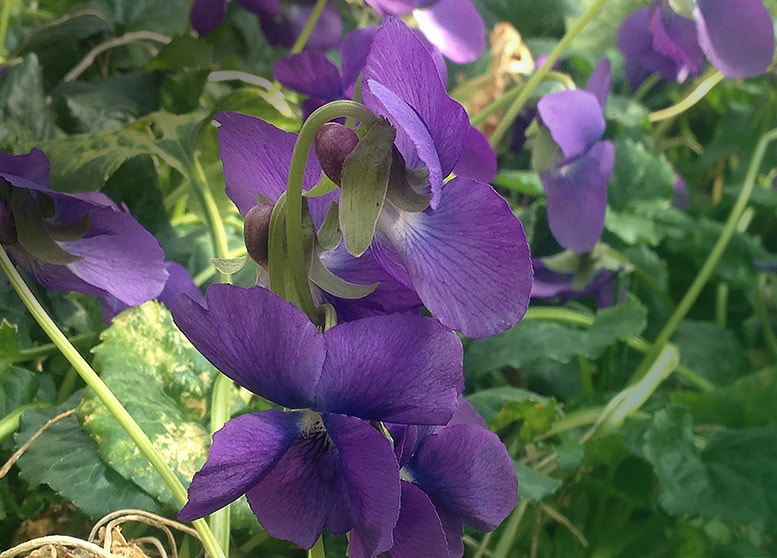
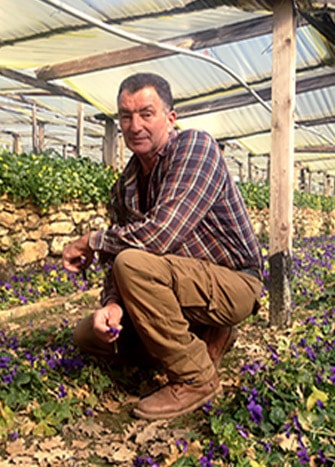
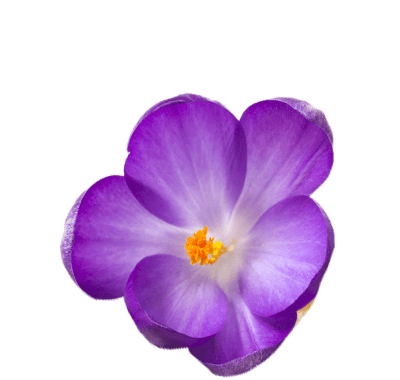
La Confiserie Florian has been working closely with Marcel Quentin for the last 30 years. Located in Tourrettes-sur-Loup, just a few kilometres from the Confiserie, M. Quentin’s violet fields cover 2 acres. “Each year our Confiserie receives between 200 and 300 kg of violets which are transformed into preserves and crystallised flowers by our talented confectioners."
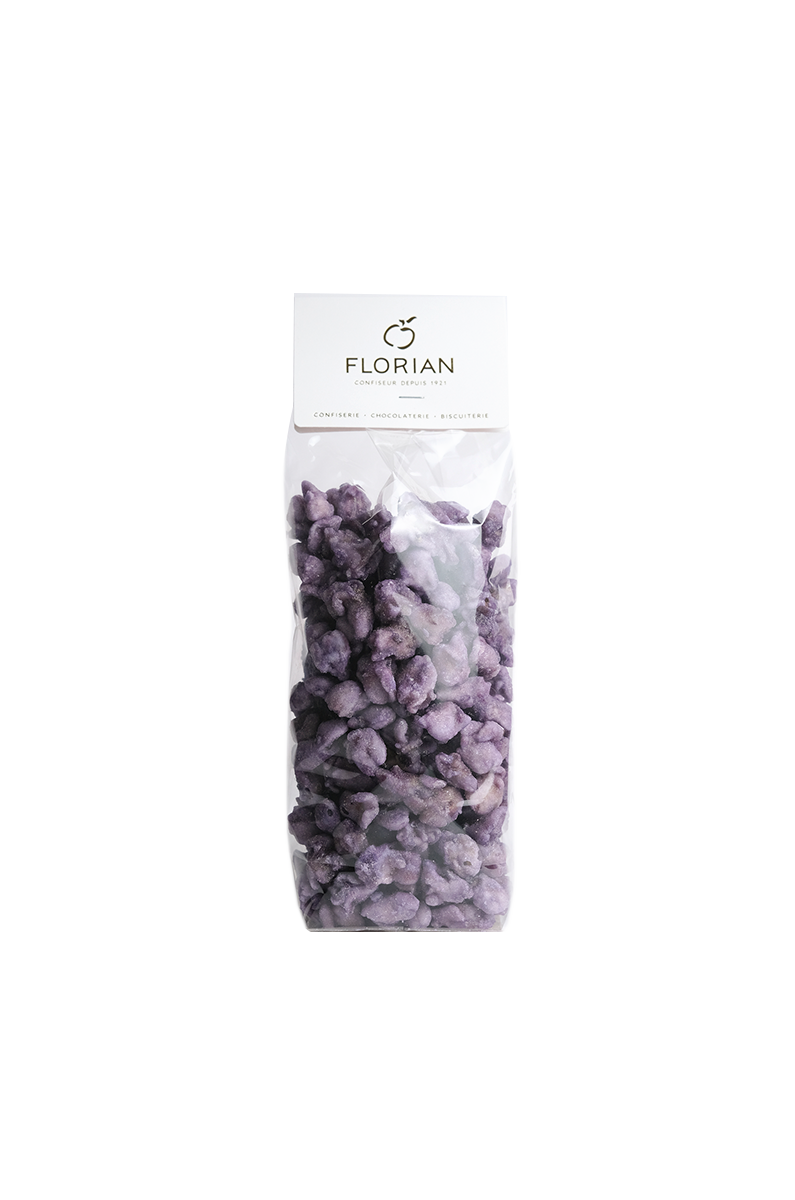
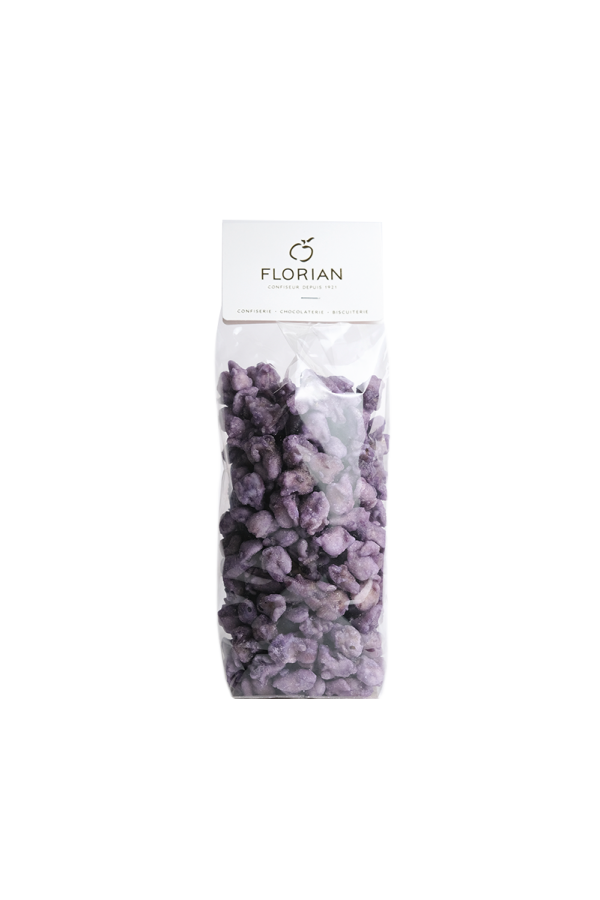
Candied violet is a traditional confectionery that dates back several centuries. Used either as an ingredient or simply for its delicate taste and floral fragrance, it won over the palates of kings and aristocrats as early as the 18th century, particularly in France and Italy. Made from edible violet flowers, this sweet treat embodies refinement and elegance in the world of confectionery.
Crystallization is an artisanal method in which each violet flower is delicately dipped into a sugar syrup, then dried until it becomes crisp and sweet. This process preserves both the beauty and the flavor of the candied violet, making it perfect to enjoy on its own or as an ingredient in desserts.
This small, discreet flower offers an unforgettable and subtle taste experience. Its use in pastry or confectionery not only enhances your culinary creations but also brings a beneficial touch to your diet.
One of the simplest pleasures is to bite directly into a candied violet. This treat evokes childhood memories with its crunchy texture and delicate floral flavor. You can offer them as gifts, serve them as a treat for your guests, or simply enjoy a gourmet moment for yourself.
Candied violets are an ideal ingredient to personalize your baked creations. Crumble them and add them to madeleines, cakes, or shortbread cookies for a spectacular visual and flavorful result. Their subtle floral notes elevate traditional desserts while adding an original twist. Here are a few ideas:
Madeleines with candied violet: fold violet pieces into the batter before baking for a delicious finish.
Chocolate fondant with violet: the combination of melting chocolate and violet creates a unique contrast of flavors.
Candied flowers can also be used to enhance your beverages. Whether decorating a cocktail, elevating a glass of champagne, or flavoring iced tea, candied violets bring a sophisticated and fragrant touch to your drinks.
To ensure the best taste experience, it is essential to choose high‑quality candied violets. At Confiserie Florian, we offer carefully selected flowers, crystallized using traditional artisanal know‑how. Our products are available online or in our boutiques, allowing you to enjoy candied violets wherever you are.
Candied violets should be stored in a cool, dry place, away from light and humidity. It is recommended to keep them in an airtight container to preserve their crisp texture and floral flavor. When properly stored, they can last for several months, allowing you to use them over time for various desserts or special occasions.
Confiserie Florian is renowned for the quality of its confectionery and its expertise in the art of flower crystallization. With know‑how passed down through generations, each candied violet is the result of meticulous work, respecting tradition while offering an unparalleled taste experience.
Candied violets are not limited to sweet pastries. They also bring sophistication and originality to savory dishes. For example, they can be used to decorate refined salads, fresh cheese toasts, or even foie gras dishes. The contrast between the sweetness of the violet and the savory character of certain ingredients offers a surprising and elegant taste experience. Here are a few ideas:
Mesclun salad with candied violets: combine mesclun leaves with nuts, goat cheese, and crushed candied flowers for a dish that is both beautiful and delicious.
Fresh cheese and violet tartines: sprinkle candied violet pieces over fresh cheese or ricotta to create an original appetizer.
The combination of candied flowers with ice creams or sorbets is another way to elevate your desserts. Whether you prepare homemade ice cream or use store‑bought, add pieces of candied violet for a delightful contrast in texture. The floral sweetness of the edible violet combined with the freshness of ice cream or sorbet creates a unique experience. You can even incorporate the violets directly into the ice cream mixture for a delicately perfumed flavor.
In France, candied violet is a true culinary treasure. It appears in desserts served in fine‑dining restaurants and in the creations of renowned pastry chefs. Cities like Toulouse, often called the “Pink City,” are famous for producing this edible flower. It is a cherished ingredient for its ability to elevate dishes while paying tribute to French culture and terroir.
Many Michelin‑starred chefs use candied violet in their dishes, whether to bring a note of freshness and sweetness or to enhance the visual appeal of their presentations. French gastronomy, with its love for the art of the table and delicate products, has elevated candied violet to the status of a luxury ingredient.
The violet flower also has a long history in other fields such as perfumery and traditional medicine. Known for its subtle fragrance, it has been used since Antiquity in the creation of perfumes and cosmetics. Its delicate and soothing scent is often associated with childhood memories or moments of sweetness.
In the language of flowers, the violet symbolizes humility, modesty, and sincerity. It has often been associated with royalty and nobility, particularly because of its purple color, once reserved for the elite. Over the centuries, the violet has also been seen as a symbol of fidelity and secret love, especially during the Victorian era, when flowers were often used to convey coded messages.
Fleurs naturelles, Sucre glace, Sucre, Gomme arabique, Eau, Arôme violette, Colorant E120 (extrait de cochenille), E132.
|
Average Nutritional Information |
For 100g |
|
Energy |
1660 kJ / 391 kcal |
|
Fats including saturated fatty acids |
< 0,5 g < 0,5 g |
|
Carbohydrates including sugar |
96 g 96 g |
|
Proteins |
0,6 g |
|
Salt |
0,03 g |



From 95€ of purchase

2 to 4 working days